Valeda Light Therapy for Dry Macular Degeneration in Sarasota, FL
A non-invasive, FDA-authorized treatment that can improve vision and slow dry AMD progression.
Valeda uses gentle red and infrared light to support healthier retinal cells and reduce the effects of dry macular degeneration. Our retina specialists will evaluate whether this therapy is appropriate for your stage of AMD and guide you through a personalized treatment plan.
If you are living with dry macular degeneration in Sarasota, Bradenton, Lakewood Ranch, or Venice and want to explore new treatment options, we offer consultations to help determine whether Valeda is right for you.
Introducing Valeda: A New Breakthrough in the Treatment of Dry Macular Degeneration
We have exciting news for patients in Sarasota, Venice, Bradenton, and Lakewood Ranch – a revolutionary new treatment for dry age-related macular degeneration (AMD) is now available. The FDA has authorized Valeda, a cutting-edge photobiomodulation (PBM) therapy, to help manage dry AMD. This treatment, which has been used in Europe for several years, is now ready to improve the lives of patients in the United States.
Clinical trials have demonstrated improvements in vision, reduced drusen deposits, and prevention of geographic atrophy progression with regular treatments. If you or someone you love is experiencing vision loss from dry macular degeneration, we encourage you to explore this groundbreaking therapy.
Contact us to schedule a consultation today!
What Is Dry Macular Degeneration?
Dry macular degeneration is a leading cause of vision loss in individuals over the age of 50. As the disease progresses, it leads to atrophy of the retina and the development of blind spots in the central vision, which can grow over time. The impact on daily activities, such as reading, driving, and recognizing faces, can be profound. While lifestyle changes and supplements like those recommended by the AREDS2 study can help slow progression, no treatment has been available to actively restore and protect vision — until now.
How Does Valeda Work?
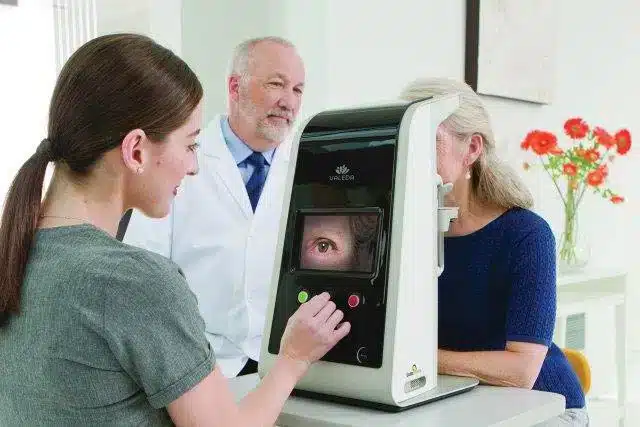
Valeda is a unique treatment that uses specific wavelengths of red and infrared light to target the cellular processes involved in dry AMD. By harnessing photobiomodulation (PBM), Valeda stimulates mitochondrial activity, promotes healthy cell metabolism, and reduces inflammation and cell death. This helps to slow the progression of the disease, improve vision, and even reduce drusen, the small yellow deposits that accumulate in the retina.
Learn more about Valeda’s photobiomodulation mechanism of action here.
Clinical Benefits of Valeda
The Valeda treatment has shown impressive results in clinical trials. In the LIGHTSITE III trial, patients who received PBM treatment demonstrated:
- Improvement in visual acuity, with an average gain of more than one line on the eye chart after one and two years of treatment.
- Reduction in drusen volume, the macular deposits that contribute to vision loss.
- Prevention of geographic atrophy progression, with a significant reduction in the development of this condition in treated patients compared to those who received a sham treatment.
These results are exciting as they provide a means to maintain vision and slow the progression of dry AMD.
Click here for detailed clinical trial data and results.
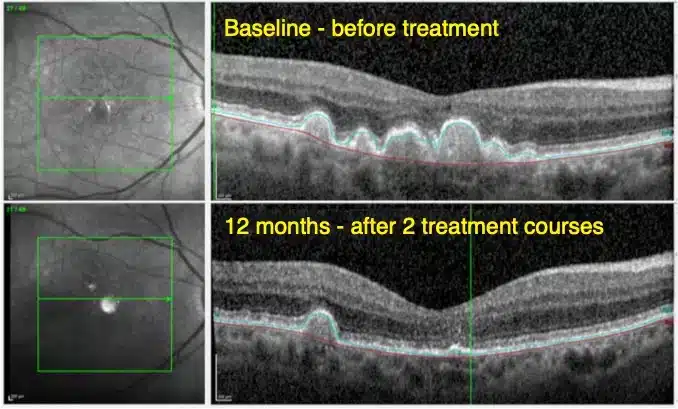
Example of drusen reduction with Valeda Light Therapy
Treatment Details
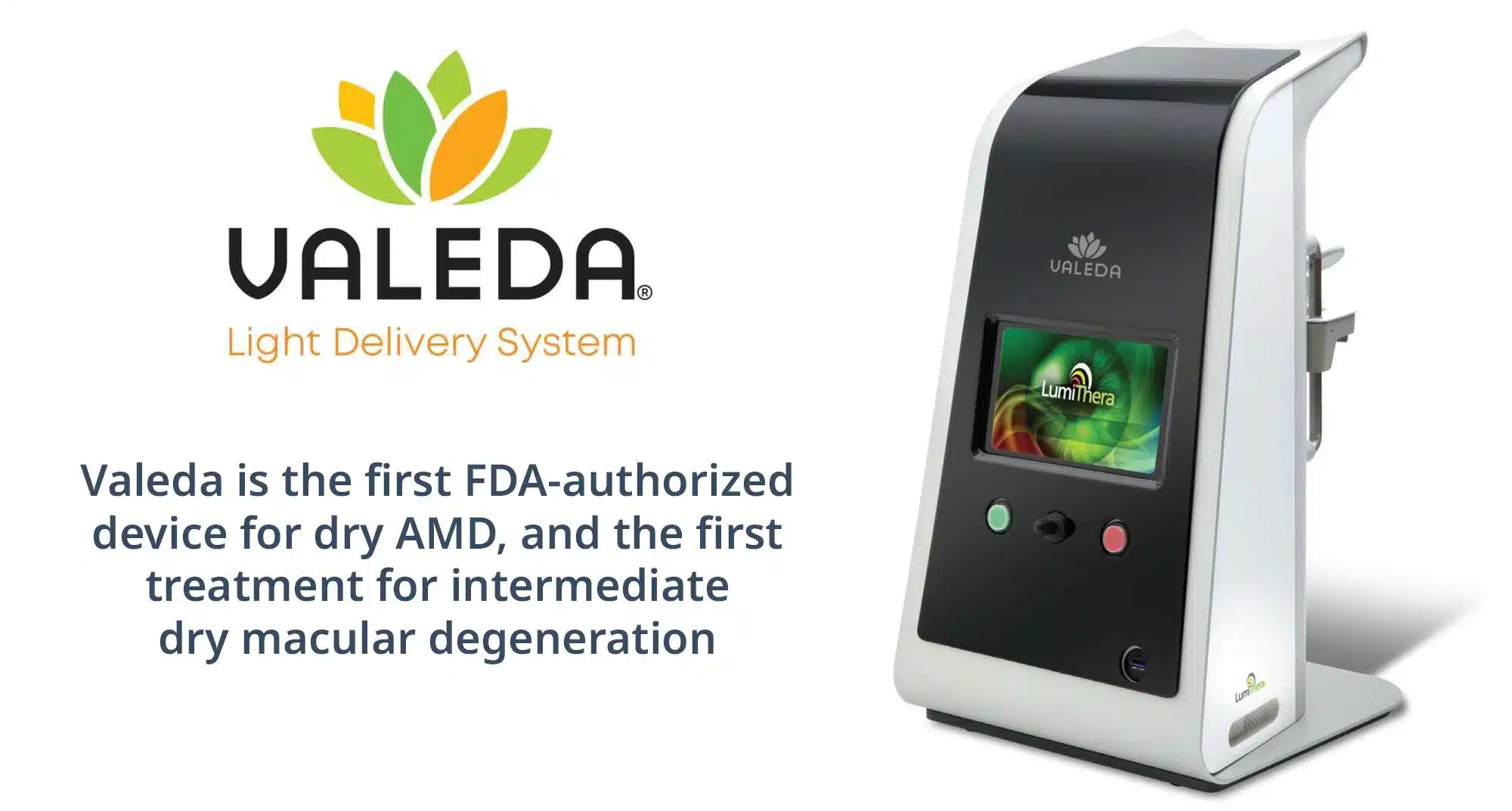
Valeda uses a specialized light delivery system to deliver light in the red and infrared spectrum. The treatment is non-invasive, safe, and involves multiple sessions spaced a few days apart.
- Treatment Schedule: Typically, patients undergo a series of 9 treatment sessions over the course of 3-5 weeks. After the initial series, follow-up cycles are repeated every 4 months.
- No Pain: The treatment is well-tolerated, with most patients experiencing no pain during the procedure.
- FDA Authorization: Valeda is the first FDA-authorized device for dry AMD, and the first treatment for intermediate dry macular degeneration, offering a significant breakthrough for patients.
Is Valeda Right for You?
Valeda is ideal for patients with dry AMD characterized by the presence of drusen or non-central geographic atrophy. The treatment is not suitable for individuals with wet AMD or those experiencing significant vision loss due to central macular atrophy.
Valeda Light Therapy FAQs
What is Valeda light therapy?
Valeda light therapy is an FDA-authorized, non-invasive treatment for intermediate dry macular degeneration. It uses specific wavelengths of red and near-infrared light to support retinal cell function.
Unlike injections or surgery, Valeda is delivered in the office using a specialized light device. The treatment is painless and does not require dilation or anesthesia.
Valeda is the first FDA-authorized device specifically indicated for intermediate dry AMD and represents a new category of treatment called photobiomodulation therapy.
What is photobiomodulation (PBM)?
Photobiomodulation, or PBM, is a non-invasive light therapy that uses specific wavelengths of red and near-infrared light to stimulate cellular activity. In the retina, PBM supports mitochondrial function, which helps improve energy production within retinal cells.
Mitochondria are responsible for producing energy that keeps cells functioning properly. In dry macular degeneration, cellular stress and inflammation contribute to gradual retinal cell loss. By enhancing mitochondrial performance, photobiomodulation may support cellular function and reduce oxidative stress in the retina.
PBM does not burn or damage tissue. It delivers low-level light energy that interacts with cells at a microscopic level. In the context of dry AMD, this therapy is designed to support retinal function and may improve visual performance in appropriately selected patients.
How does Valeda light therapy work for dry macular degeneration?
Valeda light therapy works by delivering specific wavelengths of red and near-infrared light to the retina to stimulate cellular function. This process, called photobiomodulation, enhances mitochondrial activity within retinal cells.
In dry macular degeneration, retinal cells become stressed and gradually lose function over time. By improving mitochondrial energy production, Valeda helps reduce inflammation, support cell survival, and improve overall retinal metabolism. This cellular support may slow the progression of disease and improve visual performance in certain patients.
Clinical trials have demonstrated improvements in visual acuity and functional vision in selected patients with intermediate dry AMD.
Valeda does not cure dry macular degeneration, but it provides a non-invasive way to support retinal health and potentially preserve central vision in patients with intermediate dry AMD.
Does Valeda light therapy work?
Clinical studies suggest that Valeda light therapy can be effective for appropriately selected patients with intermediate dry macular degeneration. In the LIGHTSITE III clinical trial, patients who received regular photobiomodulation treatments demonstrated measurable improvements in visual acuity and reductions in drusen volume compared to untreated groups.
In clinical trials, some patients experienced an average improvement of approximately one line on the eye chart compared to untreated groups. The study also suggested a lower rate of progression toward geographic atrophy compared to untreated groups.
It is important to understand that results vary. Valeda does not cure dry macular degeneration, and it does not reverse advanced geographic atrophy. Its benefit appears strongest in patients with intermediate dry AMD who still have functioning central retinal cells.
When used in appropriate candidates and combined with regular monitoring, Valeda offers a non-invasive treatment option that may help maintain or improve visual function over time.
In clinical studies, some patients began to notice improvements in visual function within several months, with continued gains observed over longer follow-up periods.
Who is a good candidate for Valeda light therapy?
Valeda light therapy is best suited for patients with intermediate dry macular degeneration who still have functioning central retinal tissue.
Patients who may benefit most from Valeda are those who:
- Have intermediate dry AMD
- Are experiencing gradual changes in central vision
- Do not have active wet AMD
- Still have viable retinal tissue in the macula
Valeda is not recommended for patients with advanced central geographic atrophy, significant central vision loss, or active wet macular degeneration.
A retina specialist determines candidacy through a comprehensive dilated exam and detailed retinal imaging. Careful evaluation ensures that treatment is offered to patients most likely to benefit from photobiomodulation therapy.
How often will I need Valeda light therapy?
Valeda light therapy is typically delivered in treatment cycles. The standard protocol involves a series of nine sessions completed over three to five weeks, often scheduled three times per week.
After the initial series is completed, follow-up treatment cycles are usually repeated every four months. Ongoing therapy helps maintain the cellular benefits achieved during the first series and supports continued retinal health.
The exact schedule may vary slightly depending on your retinal findings and how your eyes respond to treatment. Your retina specialist will monitor your progress with imaging and adjust the timing of repeat cycles as needed.
How long is each Valeda light therapy session?
Each Valeda light therapy session lasts approximately 20 minutes. The treatment is performed while you are seated comfortably, and no dilation or injections are required.
During the session, the device delivers controlled red and near-infrared light to the retina. The process is painless, and most patients experience little to no discomfort.
Because Valeda is non-invasive, there is no recovery time required after the session. Patients are typically able to resume normal activities immediately.
Does Medicare cover Valeda light therapy?
Medicare coverage for Valeda light therapy varies and is not universally guaranteed. Because Valeda is an FDA-authorized device-based treatment rather than a medication, coverage depends on individual Medicare plans and regional policy determinations.
Some patients may have partial coverage under Medicare Part B if the treatment is deemed medically necessary. Others may have out-of-pocket costs depending on their supplemental insurance and specific plan details.
Before beginning treatment, retina offices typically perform a benefits investigation to determine coverage and provide a clear estimate of potential costs. Patients are encouraged to discuss insurance questions with the practice so they can understand their financial responsibility before starting therapy.
How much is Valeda light therapy?
The cost of Valeda light therapy can vary depending on your treatment plan and insurance coverage. Because Valeda is delivered in treatment cycles rather than as a single procedure, pricing is typically structured around a series of sessions.
Out-of-pocket costs depend on whether your insurance provides coverage and whether deductibles or copays apply. Some patients may pay entirely out of pocket, while others may receive partial reimbursement depending on their plan.
Before beginning therapy, your retina specialist’s office will review your benefits and provide a clear estimate of expected costs. Financial counseling is usually available so you can understand your options and make an informed decision before starting treatment.
Can I drive after a Valeda light therapy session?
Yes, most patients are able to drive immediately after a Valeda light therapy session. The treatment is non-invasive, does not require dilation, and does not involve injections or anesthesia.
Because Valeda does not blur vision or cause significant light sensitivity, there is typically no recovery time needed. Patients can return to normal daily activities, including driving, the same day.
If you feel uncomfortable or experience temporary visual changes, you may choose to have someone drive you home, but this is not usually necessary.
Where to Get Valeda Light Therapy for Dry Macular Degeneration in Sarasota and Venice
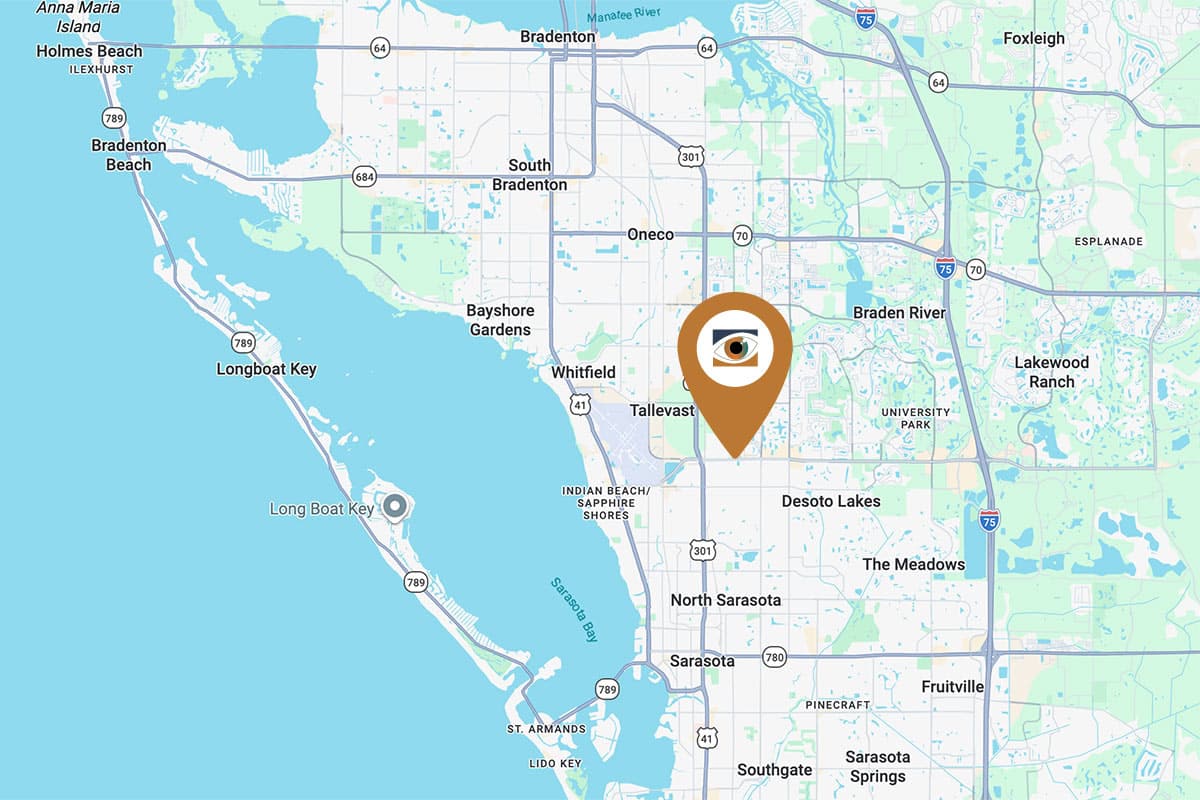
You can receive Valeda light therapy for dry macular degeneration at our Shane Retina locations throughout Sarasota and Venice, Florida. Each office offers specialized evaluation and on-site Valeda photobiomodulation treatment for patients with intermediate dry AMD and non-central geographic atrophy.
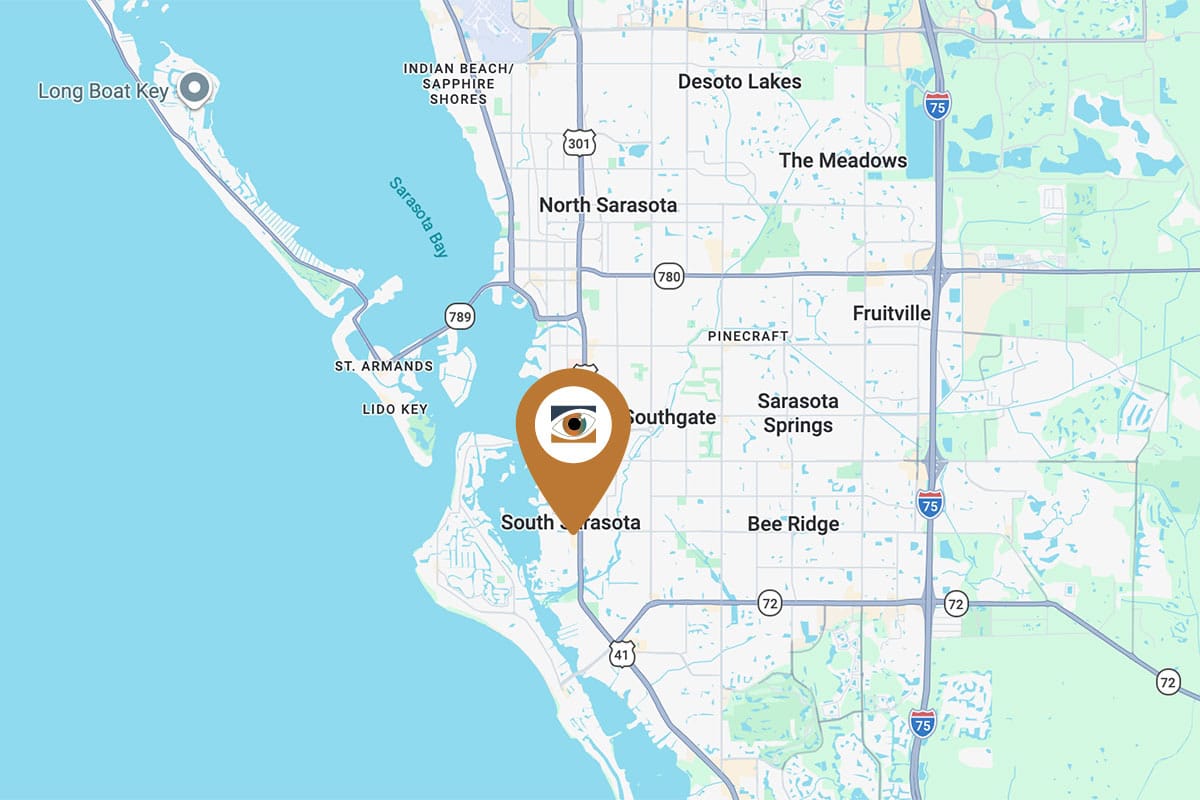
Sarasota - University Parkway Office
Located just west of I-75 on University Parkway in University Health Park.
Our University Parkway location serves patients from Sarasota, Lakewood Ranch, Bradenton, and surrounding areas of Manatee County. Valeda light therapy is available at this office for eligible patients with dry macular degeneration, with in-clinic treatment sessions and ongoing monitoring by our retina specialists.
Sarasota - South Tamiami Trail Office
Located on South Tamiami Trail just south of Bee Ridge Road.
Our South Tamiami Trail location serves patients throughout Sarasota, Siesta Key, and nearby Sarasota County communities. Patients at this office can receive Valeda photobiomodulation therapy for dry macular degeneration as part of a personalized treatment plan designed to help slow disease progression and support visual function.
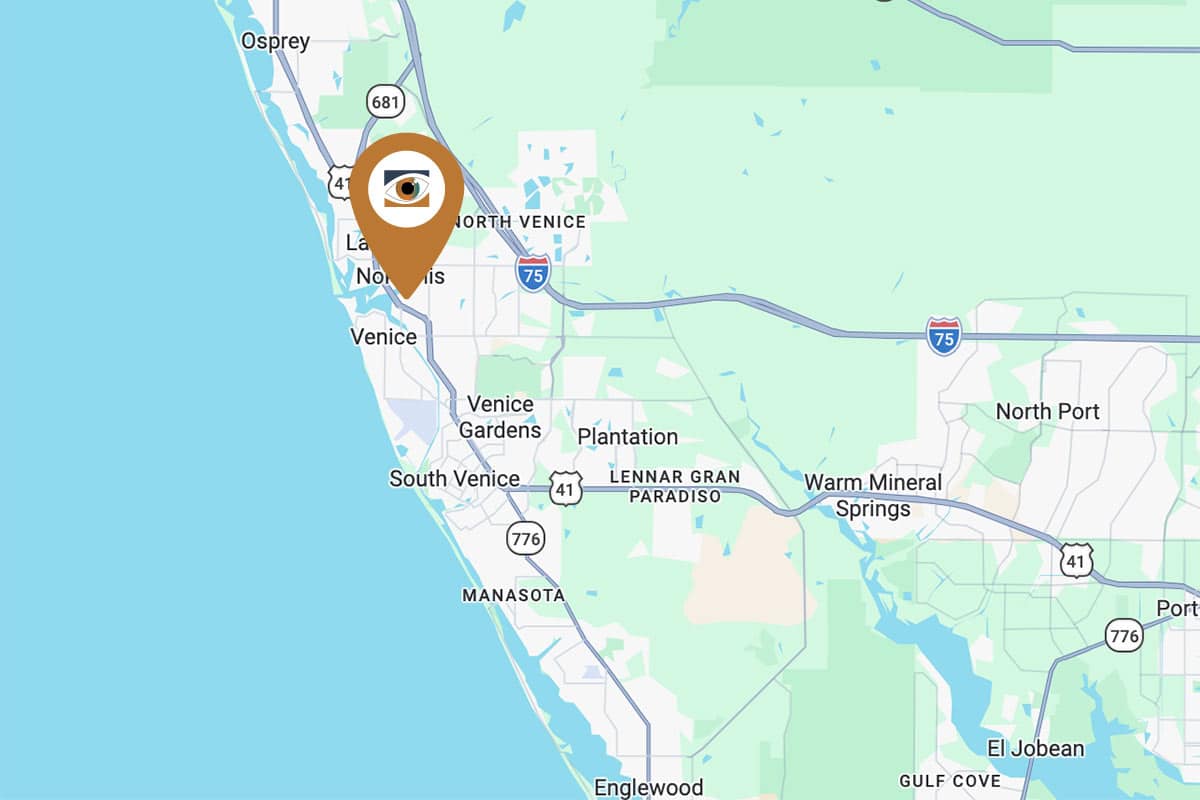
Venice Retina Office
Located in central Venice near Venetia Bay Boulevard.
Patients in Venice, North Port, Englewood, and surrounding areas of southern Sarasota County can receive Valeda light therapy for dry macular degeneration at this location. Our team provides on-site Valeda treatment sessions and follow-up care focused on preserving central vision and maintaining independence.
“Valeda Light Therapy represents a remarkable advancement in managing dry macular degeneration. Our goal is to slow progression, preserve your sight, and help you continue living life on your terms.”
– Dr. Thomas Shane,
Dry Macular Degeneration Specialist and founder of Shane Retina
Valeda Patient Story: “The blank spaces started filling back in”
One patient’s experience with light therapy for Macular Degeneration

When 78-year-old Thomas S. sat down to read, words didn’t just blur—they broke apart.
“Sometimes letters in captions looked missing,” he recalled. “On the computer I had to turn my head to work around a little blank spot in the middle of my vision.”
Thomas had been living with age-related macular changes for several years. He tried practical fixes—larger type on a Kindle, brighter task lighting—but the gaps in print and TV captions became harder to ignore. “That’s what got me to call Dr. Shane,” he said.
Last year, Thomas learned about Valeda® light therapy, a non-invasive treatment newly available in the U.S. after several years of use abroad. What convinced him to try it, he says, was a combination of timing and the way the care team presented the facts.
“Dr. Shane explained it had been used overseas and the early results here were promising,” he said. “I was able to start about a week later.”
The routine, Thomas says, was straightforward. “It’s extremely easy—about 90 seconds per eye. The machine is comfortable. I did Monday, Wednesday, Friday. Scheduling was flexible, and we set all nine appointments at the start so I never got confused.”
“I saw a dramatic improvement in the missing-letters phenomenon—the blank spaces started filling back in again.”
Thomas completed two cycles of nine sessions each before he noticed changes that mattered to him.
“After the second cycle I started to notice a difference,” he said. “On the television, the blank spaces seemed smaller and I could read the graphics better. I’m a voracious reader, and reading smaller print—books, menus, the computer—got easier.”
At a follow-up visit, imaging results aligned with his experience.
“Dr. Shane said she was really pleased and pointed out improvements in the pictures,” he said.
For Thomas, the value is measured in everyday moments.
“Reading is easier again,” he said simply. “I’m a very happy camper. The team made everything seamless—from the first call to getting me started.”
Clinical snapshot
After 3 cycles (1 year): visual acuity improved from 20/40 to 20/30 in the right eye and from 20/60 to 20/40 in the left eye.
Individual results vary. This article shares one patient’s experience and is not medical advice or a guarantee of outcome. Your doctor will recommend a plan based on your specific findings.
Thinking about light therapy for macular degeneration?
We offer same-week AMD consultations and have Velda Light Therapy available at each of our University Parkway, South Tamiami, and Venice locations. Call (941) 351-1200 to learn more.
Get Started with Valeda Light Therapy for Dry Macular Degeneration Today!
If you or someone you know is living with dry macular degeneration, contact us today to schedule a consultation. Our team will evaluate your condition and determine if Valeda light therapy is the right treatment option for you. Don’t wait to take control of your vision – we’re here to help!
At Shane Retina, we are available daily with the newest and best treatment options for macular degeneration in Sarasota and Manatee counties. For further details, or to schedule an appointment, please contact our office at (941) 351-1200.