Valeda Light Therapy for Dry Macular Degeneration in Sarasota and Bradenton

A non-invasive, FDA-authorized treatment that can improve vision and slow dry AMD progression.

Valeda uses gentle red and infrared light to support healthier retinal cells and reduce the effects of dry macular degeneration. Our retina specialists will evaluate whether this therapy is appropriate for your stage of AMD and guide you through a personalized treatment plan.

If you are living with dry macular degeneration in Sarasota, Bradenton, Lakewood Ranch, or Venice and want to explore new treatment options, we offer consultations to help determine whether Valeda is right for you.

Shane Retina > Patient Services & Education > Valeda Dry AMD Treatment

At a Glance: Valeda Light Therapy

Valeda is an in-office light treatment for dry age-related macular degeneration (AMD). It uses gentle amber, red, and near-infrared light, a process called photobiomodulation, to support the cells of the retina.

  • Who it is for: Adults with dry AMD who have some loss of central vision, between 20/32 and 20/70 on the eye chart with glasses. The retina should show medium or large drusen (yellow deposits) or geographic atrophy (areas of lost retina cells) that has not reached the center of the macula. It is not used in eyes that have or have had wet AMD.
  • What it is like: You sit at the device with your chin and forehead resting on supports while it shines light into the eye. Treatment sessions involve no needles or anesthesia, and you do not need dilating drops.
  • The schedule: Nine sessions over three to five weeks, repeated about every four months. The main study followed patients on this schedule for two years.
  • What to expect: In the main U.S. study, treated eyes improved by about one line on the eye chart on average after roughly two years. The benefit is modest, and results vary from person to person.
  • Next step: A dilated exam and retinal imaging show whether Valeda is a good fit. Call (941) 351-1200 to schedule a consultation.

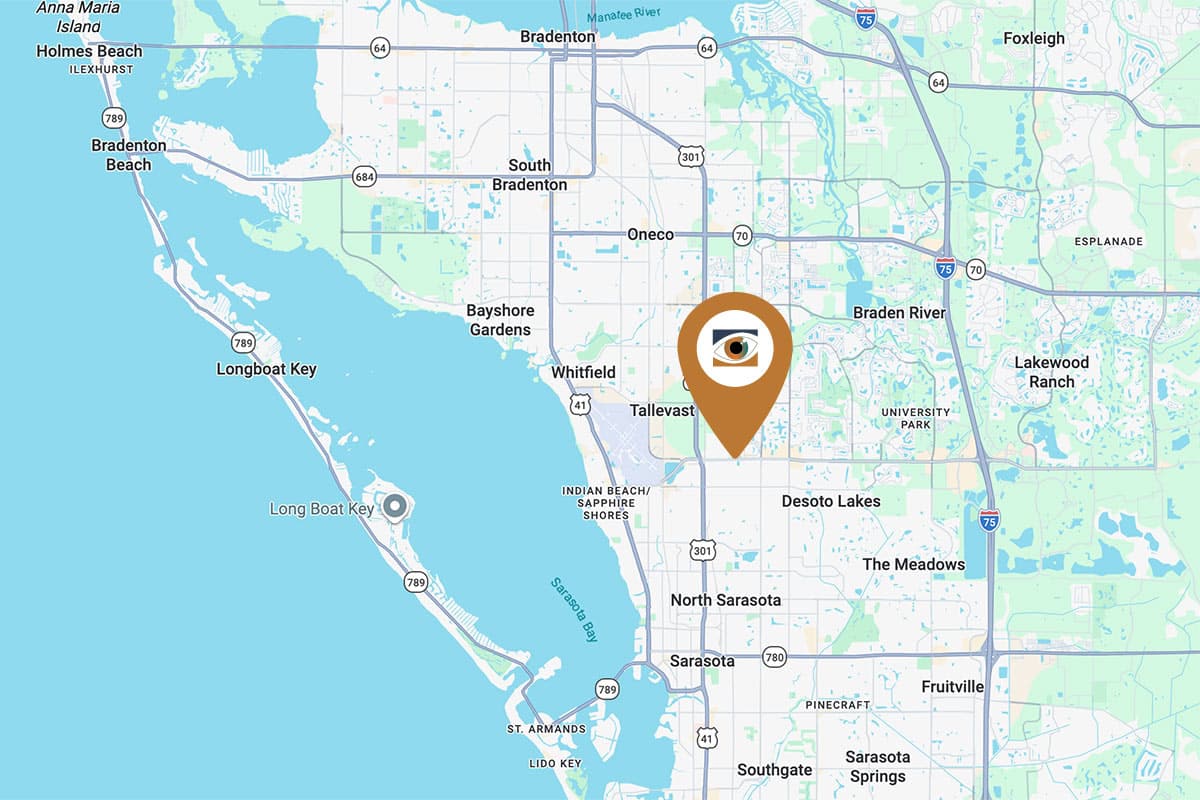
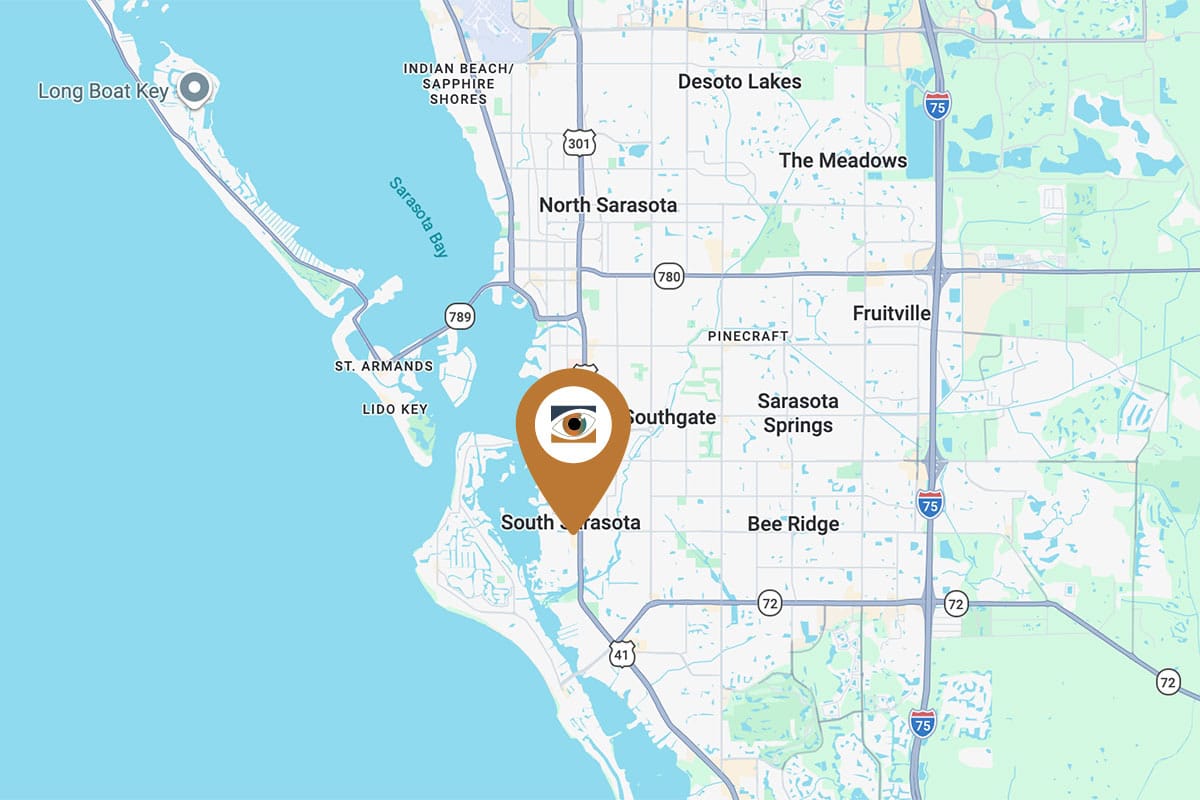
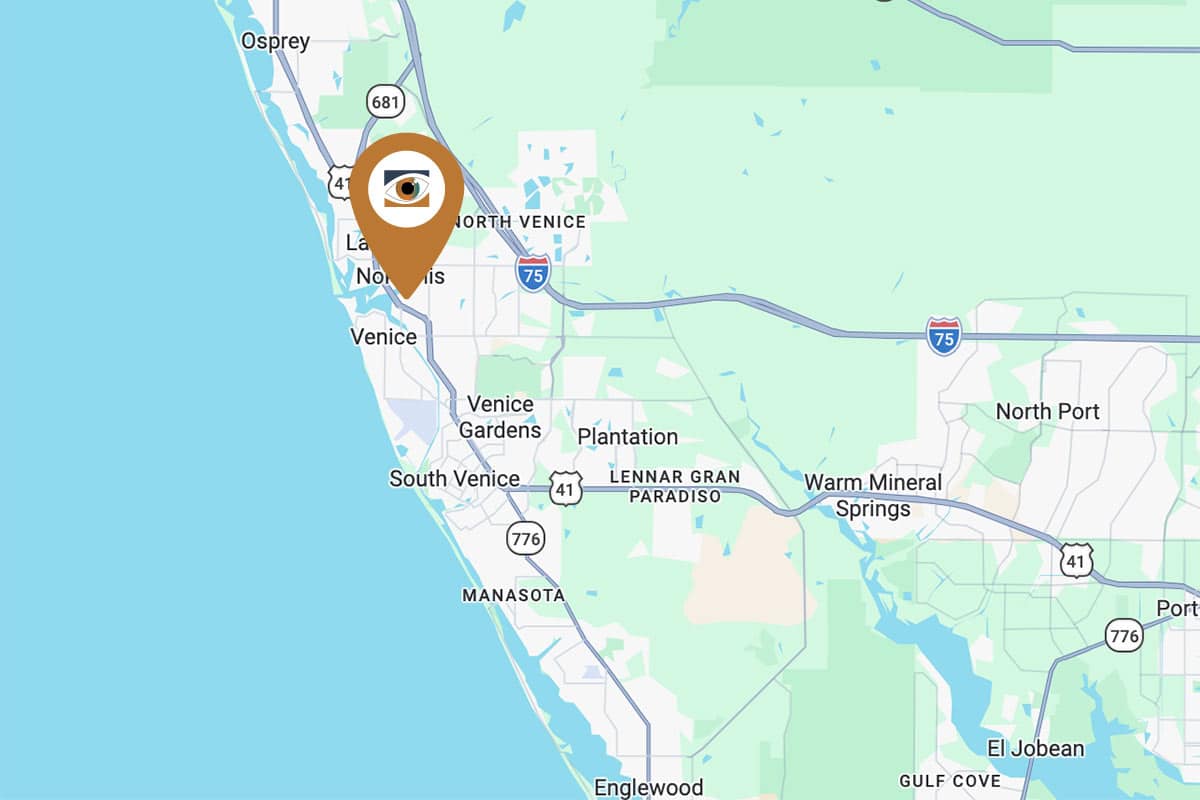
Valeda is available at all three Shane Retina offices: University Parkway and South Tamiami Trail in Sarasota, and Venice Retina in Venice.

Table of Contents
    Add a header to begin generating the table of contents
    Scroll to Top

    Medically reviewed by Thomas Shane, M.D., Retina Specialist – Last updated October 2, 2026

    Introducing Valeda: A New Breakthrough in the Treatment of Dry Macular Degeneration

    We have exciting news for patients in Sarasota, Venice, Bradenton, and Lakewood Ranch – a revolutionary new treatment for dry age-related macular degeneration (AMD) is now available. The FDA has authorized Valeda, a cutting-edge photobiomodulation (PBM) therapy, to help manage dry AMD. This treatment, which has been used in Europe for several years, is now ready to improve the lives of patients in the United States.

    Clinical trials have demonstrated improvements in vision, reduced drusen deposits, and prevention of geographic atrophy progression with regular treatments. If you or someone you love is experiencing vision loss from dry macular degeneration, we encourage you to explore this groundbreaking therapy.

    Contact us to schedule a consultation today!
    Valeda Light Therapy - Dry Macular Degeneration Treatment in Sarasota Florida

    What Is Dry Macular Degeneration?

    Dry macular degeneration is a leading cause of vision loss in individuals over the age of 50. As the disease progresses, it leads to atrophy of the retina and the development of blind spots in the central vision, which can grow over time. The impact on daily activities, such as reading, driving, and recognizing faces, can be profound. While lifestyle changes and supplements like those recommended by the AREDS2 study can help slow progression, no treatment has been available to actively restore and protect vision — until now.

    Illustration comparing a normal eye with an eye with dry macular degeneration at the fovea, with pictures of a plant seen clearly and a plant with blurred central detail.
    Dry macular degeneration damages the macula, the center of the retina. It can blur the center of what you see, while side vision stays clear.

    How Does Valeda Work?

    Valeda is a unique treatment that uses specific wavelengths of red and infrared light to target the cellular processes involved in dry AMD. By harnessing photobiomodulation (PBM), Valeda stimulates mitochondrial activity, promotes healthy cell metabolism, and reduces inflammation and cell death. This helps to slow the progression of the disease, improve vision, and even reduce drusen, the small yellow deposits that accumulate in the retina.

    Learn more about Valeda’s photobiomodulation mechanism of action here.

    Illustration of the layers of the retina with an arrow showing light entering, labeling the nerve fiber layer, ganglion cells, rod and cone photoreceptor cells, retinal pigment epithelium, and choroid.
    Valeda shines low-level light into the eye to reach the cells of the retina, shown here in layers.
    If you suffer from dry macular degeneration we encourage you to take advantage of these exciting new advances in medical technology. Call us today at (941) 351-1200 to schedule your Valeda Light Therapy consultation!

    Clinical Benefits of Valeda

    The Valeda treatment has shown impressive results in clinical trials. In the LIGHTSITE III trial, patients who received PBM treatment demonstrated:

    • Improvement in visual acuity, with an average gain of more than one line on the eye chart after one and two years of treatment.
    • Reduction in drusen volume, the macular deposits that contribute to vision loss.
    • Prevention of geographic atrophy progression, with a significant reduction in the development of this condition in treated patients compared to those who received a sham treatment.

    These results are exciting as they provide a means to maintain vision and slow the progression of dry AMD.

    Click here for detailed clinical trial data and results.
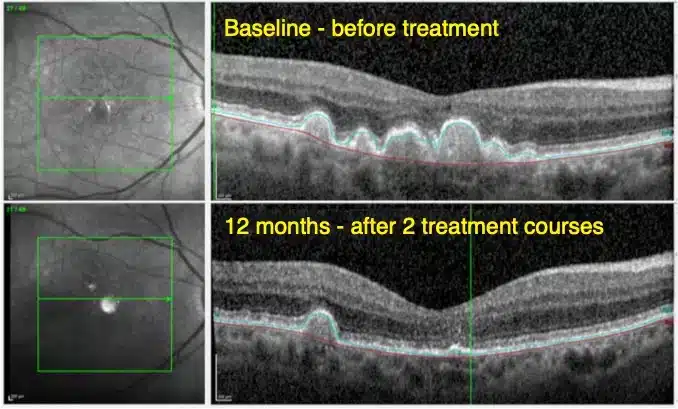
    Example of Drusen Change with Valeda Dry Macular Degeneration Treatment

    Example of drusen reduction with Valeda Light Therapy

    Understanding the Research

    The FDA authorized Valeda in November 2024, based largely on a study called LIGHTSITE III. The study followed 100 patients at 10 U.S. centers. Some eyes received real treatment and others received a sham (placebo) treatment, and neither the patients nor the examiners knew which was which.

    Vision improved in both groups. After about two years, eyes treated with Valeda had gained a little more than one line on the eye chart, on average (one line is five letters). That was about four letters more than the sham-treated eyes gained, a difference the FDA describes as about one line.

    The FDA found the improvement measurable but small. The study lasted two years, so results beyond that are not known, and the benefit may fade after treatment stops.

    Treatment Details

    Valeda uses a specialized light delivery system to deliver light in the red and infrared spectrum. The treatment is non-invasive, safe, and involves multiple sessions spaced a few days apart.

    • Treatment Schedule: Typically, patients undergo a series of 9 treatment sessions over the course of 3-5 weeks. After the initial series, follow-up cycles are repeated every 4 months.
    • No Pain: The treatment is well-tolerated, with most patients experiencing no pain during the procedure.
    • FDA Authorization: Valeda is the first FDA-authorized device for dry AMD, and the first treatment for intermediate dry macular degeneration, offering a significant breakthrough for patients.
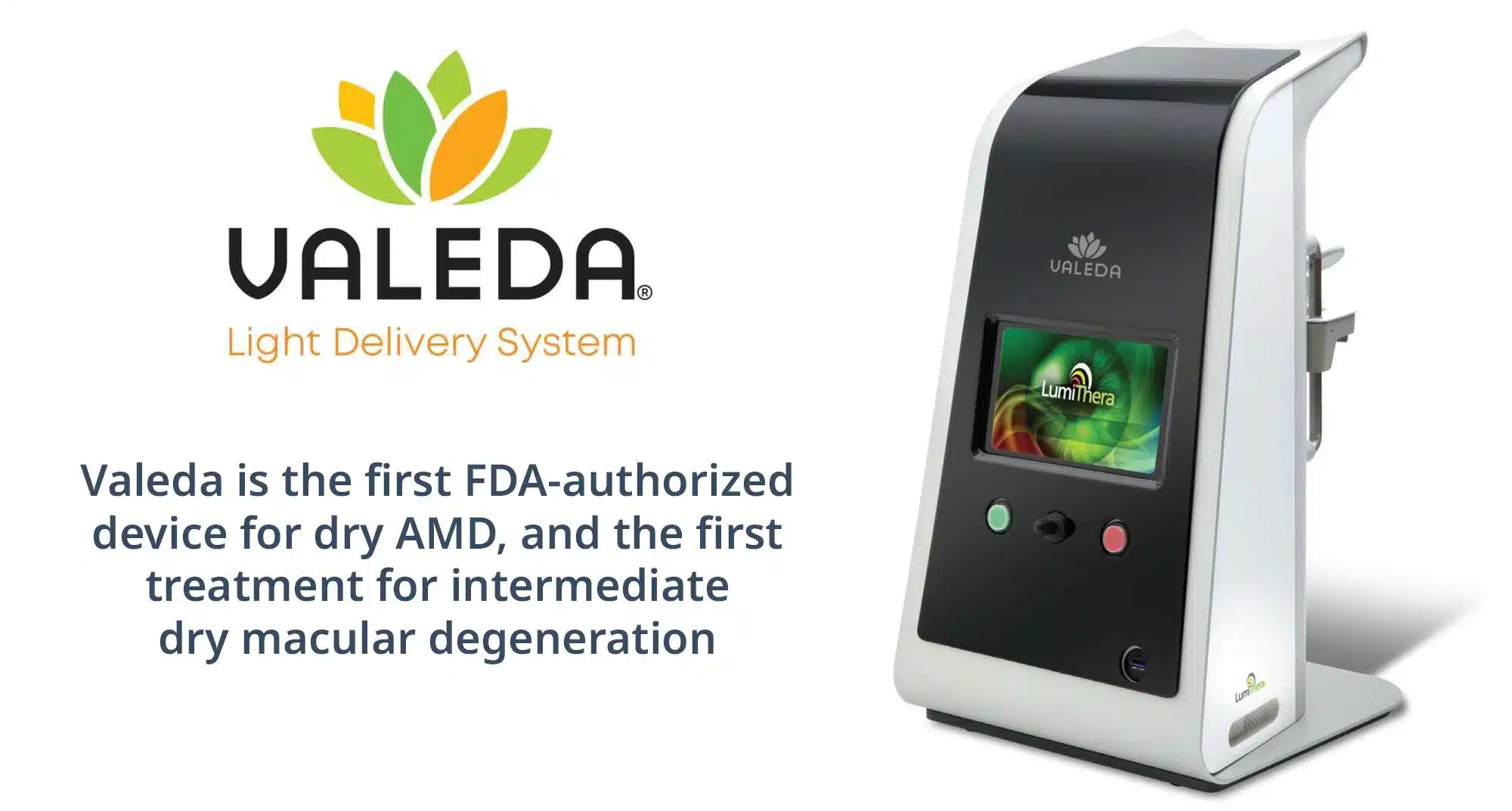
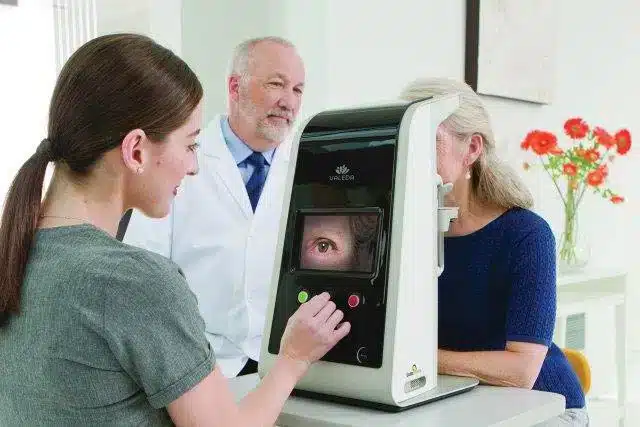
    Valeda Device - the first FDA authorized device for dry age-related macular degeneration

    What a Valeda Session Is Like

    You sit comfortably at the Valeda device with your chin and forehead resting against supports, much like the equipment used during an eye exam. The device shines a sequence of soft amber, red, and near-infrared light toward the eye. Your eyes are open for part of each treatment and closed for part of it.

    The light itself runs for only a few minutes of each visit. Your pupils are not dilated, so you can go about your day afterward. We can schedule all nine sessions at the start of a cycle, so the routine is easy to keep.

    Valeda Patient Story: “The blank spaces started filling back in”

    One patient’s experience with light therapy for Macular Degeneration

    Valeda Light Therapy for Dry Macular Degeneration Testimonial in Sarasota Florida

    When 78-year-old Thomas S. sat down to read, words didn’t just blur—they broke apart. 

    “Sometimes letters in captions looked missing,” he recalled. “On the computer I had to turn my head to work around a little blank spot in the middle of my vision.”

    Thomas had been living with age-related macular changes for several years. He tried practical fixes—larger type on a Kindle, brighter task lighting—but the gaps in print and TV captions became harder to ignore. “That’s what got me to call Dr. Shane,” he said.

    Last year, Thomas learned about Valeda® light therapy, a non-invasive treatment newly available in the U.S. after several years of use abroad. What convinced him to try it, he says, was a combination of timing and the way the care team presented the facts.

    “Dr. Shane explained it had been used overseas and the early results here were promising,” he said. “I was able to start about a week later.”

    The routine, Thomas says, was straightforward. “It’s extremely easy—about 90 seconds per eye. The machine is comfortable. I did Monday, Wednesday, Friday. Scheduling was flexible, and we set all nine appointments at the start so I never got confused.”

    “I saw a dramatic improvement in the missing-letters phenomenon—the blank spaces started filling back in again.”

    Thomas completed two cycles of nine sessions each before he noticed changes that mattered to him.

    “After the second cycle I started to notice a difference,” he said. “On the television, the blank spaces seemed smaller and I could read the graphics better. I’m a voracious reader, and reading smaller print—books, menus, the computer—got easier.”
    valeda light therapy for dry macular degeneration

    At a follow-up visit, imaging results aligned with his experience.

    “Dr. Shane said she was really pleased and pointed out improvements in the pictures,” he said.

    For Thomas, the value is measured in everyday moments.

    “Reading is easier again,” he said simply. “I’m a very happy camper. The team made everything seamless—from the first call to getting me started.”

    Clinical snapshot

    After 3 cycles (1 year): visual acuity improved from 20/40 to 20/30 in the right eye and from 20/60 to 20/40 in the left eye.

    Individual results vary. This article shares one patient’s experience and is not medical advice or a guarantee of outcome. Your doctor will recommend a plan based on your specific findings.

    Thinking about light therapy for macular degeneration?

    We offer same-week AMD consultations and have Valeda Light Therapy available at each of our University Parkway, South Tamiami, and Venice locations. Call (941) 351-1200 to learn more.


    Is Valeda Right for You?

    Valeda is ideal for patients with dry AMD characterized by the presence of drusen or non-central geographic atrophy. The treatment is not suitable for individuals with wet AMD or those experiencing significant vision loss due to central macular atrophy.

    Who Should Not Have Valeda

    Valeda should also not be used in people who are sensitive to amber (yellow), red, or near-infrared light. The same goes for anyone with a history of a nervous system condition triggered by light, such as epilepsy or migraine. If you have used a medicine, cream, or injection in the past 30 days that makes your skin or eyes more sensitive to light, tell your retina specialist before treatment begins. We will review your health history and retinal images before recommending Valeda.

    How Valeda Fits With the Rest of Your AMD Care

    Valeda is one part of caring for dry macular degeneration, used alongside the everyday steps that protect your sight. If your retina specialist has recommended an AREDS2 eye vitamin, keep taking it, and keep up with your regular exams and imaging.

    If you have geographic atrophy, Syfovre or Izervay may be another option. These injections slow the growth of atrophy.

    Dry AMD can turn into wet AMD, which needs prompt treatment with eye injections. In the Valeda study, wet AMD developed in 7.5 percent of treated eyes, compared with 3.6 percent of sham-treated eyes.

    The FDA considers the reason for this difference uncertain. Most eyes that developed wet AMD already had wet AMD in the other eye, so the FDA asks doctors to watch closely when a patient’s other eye has wet AMD.

    Reading glasses resting on an open book with a dark blurry spot in the center of the image, simulating a central blind spot.
    A simulated dark spot in the center of vision hides part of an open book.

    Checking your vision at home between visits helps catch changes early. Use our printable Shane Retina Amsler grid, a simple chart of straight lines, once a day. Check one eye at a time, and call us right away if lines look wavy, blurry, or missing.

    A man covers one eye with his hand while looking at the center dot of an Amsler grid held at reading distance.
    A man covers one eye while looking at the center dot of an Amsler grid.

    When to Call a Retina Specialist:

    Wet AMD can develop at any time, including while you are receiving Valeda. When it is found early and treated consistently, many patients keep useful vision for years.

    Call us right away if you notice:

    These changes can be early signs of wet macular degeneration. Call (941) 351-1200 right away instead of waiting for your next Valeda session or routine exam.

    “Valeda Light Therapy represents a remarkable advancement in managing dry macular degeneration. Our goal is to slow progression, preserve your sight, and help you continue living life on your terms.”

    – Dr. Thomas Shane,
    Dry Macular Degeneration Specialist and founder of Shane Retina

    Valeda Light Therapy FAQs

    Click on a question below to view the answer.

    Valeda light therapy is an FDA-authorized, non-invasive treatment for intermediate dry macular degeneration. It uses specific wavelengths of red and near-infrared light to support retinal cell function.

    Unlike injections or surgery, Valeda is delivered in the office using a specialized light device. The treatment is painless and does not require dilation or anesthesia.

    Valeda is the first FDA-authorized device specifically indicated for intermediate dry AMD and represents a new category of treatment called photobiomodulation therapy.

    Photobiomodulation, or PBM, is a non-invasive light therapy that uses specific wavelengths of red and near-infrared light to stimulate cellular activity. In the retina, PBM supports mitochondrial function, which helps improve energy production within retinal cells.

    Mitochondria are responsible for producing energy that keeps cells functioning properly. In dry macular degeneration, cellular stress and inflammation contribute to gradual retinal cell loss. By enhancing mitochondrial performance, photobiomodulation may support cellular function and reduce oxidative stress in the retina.

    PBM does not burn or damage tissue. It delivers low-level light energy that interacts with cells at a microscopic level. In the context of dry AMD, this therapy is designed to support retinal function and may improve visual performance in appropriately selected patients.

    Valeda light therapy works by delivering specific wavelengths of red and near-infrared light to the retina to stimulate cellular function. This process, called photobiomodulation, enhances mitochondrial activity within retinal cells.

    In dry macular degeneration, retinal cells become stressed and gradually lose function over time. By improving mitochondrial energy production, Valeda helps reduce inflammation, support cell survival, and improve overall retinal metabolism. This cellular support may slow the progression of disease and improve visual performance in certain patients.

    Clinical trials have demonstrated improvements in visual acuity and functional vision in selected patients with intermediate dry AMD.

    Valeda does not cure dry macular degeneration, but it provides a non-invasive way to support retinal health and potentially preserve central vision in patients with intermediate dry AMD.

    Clinical studies suggest that Valeda light therapy can be effective for appropriately selected patients with intermediate dry macular degeneration. In the LIGHTSITE III clinical trial, patients who received regular photobiomodulation treatments demonstrated measurable improvements in visual acuity and reductions in drusen volume compared to untreated groups.

    In clinical trials, some patients experienced an average improvement of approximately one line on the eye chart compared to untreated groups. The study also suggested a lower rate of progression toward geographic atrophy compared to untreated groups.

    It is important to understand that results vary. Valeda does not cure dry macular degeneration, and it does not reverse advanced geographic atrophy. Its benefit appears strongest in patients with intermediate dry AMD who still have functioning central retinal cells.

    When used in appropriate candidates and combined with regular monitoring, Valeda offers a non-invasive treatment option that may help maintain or improve visual function over time.

    In clinical studies, some patients began to notice improvements in visual function within several months, with continued gains observed over longer follow-up periods.

    Valeda light therapy is best suited for patients with intermediate dry macular degeneration who still have functioning central retinal tissue.

    Patients who may benefit most from Valeda are those who:

    • Have intermediate dry AMD
    • Are experiencing gradual changes in central vision
    • Do not have active wet AMD
    • Still have viable retinal tissue in the macula

    Valeda is not recommended for patients with advanced central geographic atrophy, significant central vision loss, or active wet macular degeneration.

    A retina specialist determines candidacy through a comprehensive dilated exam and detailed retinal imaging. Careful evaluation ensures that treatment is offered to patients most likely to benefit from photobiomodulation therapy.

    Valeda light therapy is typically delivered in treatment cycles. The standard protocol involves a series of nine sessions completed over three to five weeks, often scheduled three times per week.

    After the initial series is completed, follow-up treatment cycles are usually repeated every four months. Ongoing therapy helps maintain the cellular benefits achieved during the first series and supports continued retinal health.

    The exact schedule may vary slightly depending on your retinal findings and how your eyes respond to treatment. Your retina specialist will monitor your progress with imaging and adjust the timing of repeat cycles as needed.

    Each Valeda light therapy session lasts approximately 20 minutes. The treatment is performed while you are seated comfortably, and no dilation or injections are required.

    During the session, the device delivers controlled red and near-infrared light to the retina. The process is painless, and most patients experience little to no discomfort.

    Because Valeda is non-invasive, there is no recovery time required after the session. Patients are typically able to resume normal activities immediately.

    Medicare coverage for Valeda light therapy varies and is not universally guaranteed. Because Valeda is an FDA-authorized device-based treatment rather than a medication, coverage depends on individual Medicare plans and regional policy determinations.

    Some patients may have partial coverage under Medicare Part B if the treatment is deemed medically necessary. Others may have out-of-pocket costs depending on their supplemental insurance and specific plan details.

    Before beginning treatment, retina offices typically perform a benefits investigation to determine coverage and provide a clear estimate of potential costs. Patients are encouraged to discuss insurance questions with the practice so they can understand their financial responsibility before starting therapy.

    The cost of Valeda light therapy can vary depending on your treatment plan and insurance coverage. Because Valeda is delivered in treatment cycles rather than as a single procedure, pricing is typically structured around a series of sessions.

    Out-of-pocket costs depend on whether your insurance provides coverage and whether deductibles or copays apply. Some patients may pay entirely out of pocket, while others may receive partial reimbursement depending on their plan.

    Before beginning therapy, your retina specialist’s office will review your benefits and provide a clear estimate of expected costs. Financial counseling is usually available so you can understand your options and make an informed decision before starting treatment.

    Most patients are comfortable driving after a Valeda light therapy session. We welcome you to bring a driver if you have any concern. The treatment is non-invasive, does not require dilation, and does not involve injections or anesthesia.

    Because Valeda does not blur vision or cause significant light sensitivity, there is typically no recovery time needed. Patients can return to normal daily activities the same day.

    Reviews From Our Patients

    Below are recent reviews from Shane Retina patients, in their own words. They cover many kinds of visits and may not mention Valeda.

    ACg8ocJUe3KL8SsiGqWtRH2mkNWk0sxdgtRDz2GI9I3aM9KkAKR1Bg=s56 c rp mo br100
    Carole McCaffrey
    15 hours ago
    I am a new patient coming as a hospital emergency follow up and they treated me as if I was an established patient for years. Kind, efficient and professional. Addressed all my concerns and promptly handled the medical issue. Could not ask for more or be more pleased with the practice.
    ACg8ocJhoDnWUw8LjBpLjL6U9xvC CCo6ZUzN6YHlvsZW4cOKChcIw=s56 c rp mo br100
    David Bramlet
    2 weeks ago
    I had a follow up appt for a prior detached retina which they repaired 1yr ago. Appt was efficient and professional and showed repair still perfect. Got a 1 yr pass!
    ACg8ocII5GFNrad0rhJLKbdVENZ4aUYwlstT5auKYl6hMrggxkaqGg=s56 c rp mo br100
    Tim Samons
    2 weeks ago
    Very caring and the most thorough eye exam I’ve ever had. Dr Shane doesn’t rush in anything. He is a great communicator and will only perform a procedures if necessary. If you need an eye specialist, I highly recommend him.
    ALV UjVGcYH2PUS0XPDnXwOTQ8E7u Fz3XHyJ1SsQ5tjy601vbYp6aKS=s56 c rp mo ba12 br100
    VPal
    2 weeks ago
    Impressed! They were able to accommodate me with a same-day appointment. When I arrived at the office, everyone was super friendly, welcoming, and helpful. Doctor Castanos seemed very knowledgeable. They even adjusted the price lower than I expected, and the eye exam was complimentary. I had such a great experience and truly appreciated the excellent service!
    ALV UjUlMpvwPU0 7B7Y4WkSAFz8vxhvtgPCzEY8Z6XJpOZv0ubExBHN=s56 c rp mo br100
    carole monine
    2 weeks ago
    Eye checked for need to have cataract surgery.Reminded about appointment by text. Good thing. Service was prompt and Dr Shane was very attentive and supportive. 6 stars Carole Monine
    ACg8ocLQHBOfdOUIYn7EmXJl9rHZC18O83UvWWn B3kmhtTFb 2eEXs=s56 c rp mo br100
    vicki robb
    2 weeks ago
    I have complete confidence in the information I receive, explanation of what my diagnosis is. Aya is fabulous, never did a "poke in the eye" go so quickly and painlessly. The entire staff...simply so nice and helpful.
    ACg8ocKRe6zBzKmXgZ2mKvwgTzBW73Wjbd7pvwDF8NXk9ocrm6sOjA=s56 c rp mo ba12 br100
    Kristine Kish
    2 weeks ago
    I have nothing but positive things to say about Dr. Shane and his staff. Very detailed exam. I felt that this Dr. knew exactly what he was doing. Best experience!
    ACg8ocJJji2 VaXXT022IBQD1s PuBy1AqMVvu8JrV BsnCqNVJwEg=s56 c rp mo br100
    cindy nelson
    3 weeks ago
    Dr Shane and her staff are friendly and professional. Testing is always precise Dr Shane cares about her patients and takes time to explain things I highly recommend Dr Shane and her staff.
    ACg8ocL3GtydLD0TU3EtJJfi3h7jbs2pWSLoPM0BkvHEOT8X 8CSHw=s56 c rp mo br100
    Jenifer Parker
    3 weeks ago
    Dr Shane and her staff are very caring and knowledgeable. The appointments run pretty much on time, and none of the three hour wait like Center for Sight. She takes the time to explain procedures, what is involved, what to expect, and when she is suggesting them.
    ALV UjUJG0wNWtk2P662GfVn67PIkqXCZljkMe3PrxzkCsiq16B2IrhX=s56 c rp mo ba12 br100
    Diane Crawford
    3 weeks ago
    Dr Shane and the all of her staff are extremely knowledgeable, caring and friendly. She does not rush you out and she listens to you. I highly recommend Dr Shane!!
    ACg8ocKd5B2XpvRrfy5ITSTt6RoHz0x zluuxH3yJZU VkJGx 0WaA=s56 c rp mo br100
    Maureen McAuley
    3 weeks ago
    It was a breath of fresh air to finally find a doctor that was professional, extremely knowledgeable and willing to explain everything to me in a clear, understandable manner. I was treated with respect from start to finish. HIGHLY RECOMMEND SHANE RETNA!!
    ACg8ocLxdTqaNeKEo3WoKliSv4T1mQhgUopVoPFQ9bSyIKSobHfQvQ=s56 c rp mo ba12 br100
    kat poynter
    3 weeks ago
    I had to go for an eye issue that popped up and they got me in same day. When I arrived there, 20 minutes early, there were at least 21 patients waiting. As my appointment time drew near, most everyone had been seen from the waiting room. My appointment was not a quick look, Mandy, the super friendly tech accomplished many tests and examinations to ensure my health and eye sight were all noted for the doctor. I saw Dr. Maria Castanos who is AMAZING. She makes you feel like you are her only patient. She is firm, friendly and efficient. She listens to understand you, not just your eye issue. When I arrived out front again there were new people moving through the area. All the staff were friendly, knowledgeable and empathic, while all the patients appeared to enjoy their visit. Shane Retina is a 10 in my book!

    Your Shane Retina Care Team

    Valeda Light Therapy at Shane Retina is overseen by our team of fellowship-trained retina specialists. Our team helps patients with dry macular degeneration understand whether this noninvasive treatment is a good fit for their care.

    Thomas Shane, M.D., retina specialist and founder of Shane Retina in Sarasota, Florida

    Thomas Shane, M.D.

    Founder of Shane Retina and a Bascom Palmer-trained vitreoretinal surgeon. Known for thorough exams, clear explanations, and an unhurried approach that has built lasting relationships with patients over many years.
    Anita Shane, M.D., retina specialist and founder of Venice Retina in Venice, Florida

    Anita Shane, M.D.

    Founder of Venice Retina and a Bascom Palmer-trained vitreoretinal surgeon. Patients describe her as kind, calm, and reassuring, with a gift for explaining complex retinal conditions in language anyone can understand.
    Konica Singla, M.D., retina and ocular oncology specialist at Shane Retina in Sarasota, Florida

    Konica Singla, M.D.

    Dual fellowship-trained in ocular oncology at Wills Eye and medical retina at Bascom Palmer. Patients describe her exams as thorough, her explanations as calm and clear, and her approach as one that puts even nervous patients at ease.
    Maria Castaños, M.D., medical retina specialist at Shane Retina in Sarasota, Florida

    Maria Castaños, M.D.

    Medical retina specialist fellowship-trained at New York Eye and Ear Infirmary of Mount Sinai. Known for detailed evaluations, direct explanations of treatment options, and an evidence-based approach informed by her published research. Fluent in Spanish.
    Gabriel Dib, FNP-C, retinal nurse practitioner at Shane Retina in Sarasota and Venice, Florida

    Gabriel Dib, FNP-C

    Originally trained as an ophthalmologist in Venezuela, where he practiced vitreoretinal surgery for 11 years before relocating to the United States. Patients describe him as thorough, gentle, and exceptionally generous with his time. Fluent in Spanish.
    Ayah Etyem, PA-C, eye injection specialist at Shane Retina in Sarasota, Florida

    Ayah Etyem, PA-C

    Eye injection specialist who began her career in ophthalmology working alongside Dr. Thomas Shane in Sarasota. Patients describe her as calm, kind, and reassuring, with a gift for making injection visits comfortable and as close to painless as possible.
    Kayla Fischer, PA-C, eye injection and Valeda light therapy provider at Shane Retina in Venice and Sarasota, Florida

    Kayla Fischer, PA-C

    Physician assistant focused on eye injection care and Valeda light therapy, seeing patients in Venice and South Sarasota. She first worked in retina care as an ophthalmic technician in Tallahassee and gave intravitreal injections during her vitreoretinal rotation.

    Get Started with Valeda Light Therapy for Dry Macular Degeneration Today!

    If you or someone you know is living with dry macular degeneration, contact us today to schedule a consultation. Our team will evaluate your condition and determine if Valeda light therapy is the right treatment option for you. Don’t wait to take control of your vision – we’re here to help!

    At Shane Retina, we are available daily with the newest and best treatment options for macular degeneration in Sarasota and Manatee counties. For further details, or to schedule an appointment, please contact our office at (941) 351-1200.