Macular Degeneration Diagnosis and Treatment in Sarasota, FL
Early diagnosis and consistent treatment can help preserve your central vision.
Age-related macular degeneration affects the part of the retina responsible for reading, driving, and recognizing faces. Our retina specialists use advanced imaging and proven treatments to detect changes early, slow disease progression, and help you maintain the best vision possible.
If you are over 60 or have a family history of A.M.D., regular retinal exams are one of the most effective steps you can take to protect your sight.
Age-related vision changes are to be expected; they happen throughout our entire lives, and in our later years they tend to progress more rapidly. While routine changes are perfectly normal, as we get older we must be cognizant of the potential for age-related macular degeneration, or A.M.D.
What is the Macula?
The origin of the word macula can be found in Latin, where it was taken to mean ‘spot.’ In regards to the eye, the macula refers to the central 5 millimeters of the retina, where vision is the sharpest. The center of the macula does have a central ‘spot’ in fact, called the fovea. Your entire ability to read and drive is located within this critical one-millimeter of the central retina.
There are many conditions that can affect the macula. While macular degeneration is the most common, you may also hear about other retinal problems such as macular pucker, macular hole, and macular dystrophy. Each of these conditions is unique, with distinct treatments and prognosis for vision.
What is Age-Related Macular Degeneration?
Age-related macular degeneration is a deterioration of the central retina that leads to a loss of visual acuity. Macular degeneration is described as age-related because it rarely occurs before the age of 60 but presents with increasing frequency as the years advance. By the time someone reaches their 80’s, they have a one in three chance of having macular degeneration.
https://www.asrs.org/patients/retinal-diseases/2/age-related-macular-degeneration
What are the Symptoms of Macular Degeneration?
Most patients with macular degeneration experience a slow, gradual decrease in their central vision over years. The vision loss from macular degeneration is fixed and constant, meaning it won’t drift through the vision or fluctuate throughout the day. This may be first noticed when a person needs more light to read, when a recent glasses update isn’t helping, or when driving becomes more difficult.
While most vision loss from macular degeneration is gradual, sometimes there can be an abrupt change. In some cases, the first symptoms of macular degeneration will be the sudden onset of distortion or a blind spot in the vision.
Macular Degeneration Specialist and founder of Shane Retina
Which Type of Macular Degeneration Do I Have?
Age-related macular degeneration comes in two flavors, dry and wet. While most folks think of dry macular degeneration as ‘the good kind’ and wet macular degeneration as ‘the bad kind,’ you can read below that this distinction is not entirely helpful.
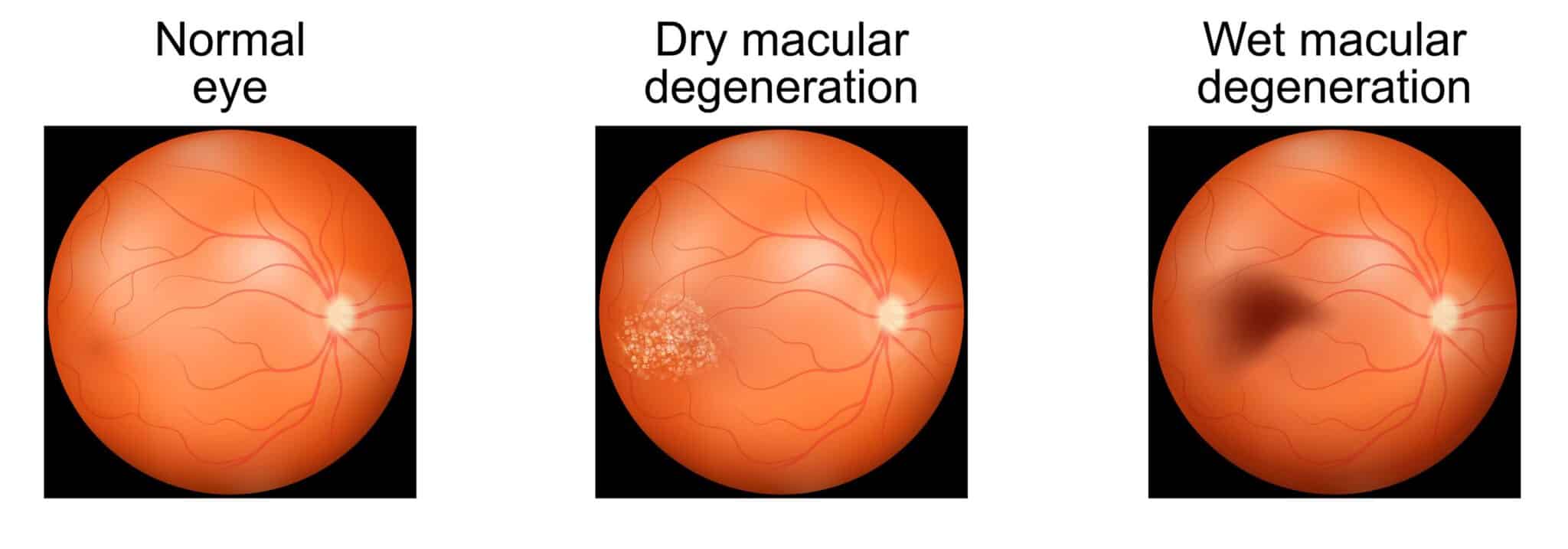
Wet macular degeneration is less common than dry, affecting only 10% of patients. Wet macular degeneration is characterized by the growth of new blood vessels that leak and bleed under the retina. When left untreated, these changes lead to rapid retinal damage and vision loss.
Although wet macular degeneration can lead to rapid vision loss, it is entirely treatable. Patients who get timely treatment for wet macular degeneration can maintain their vision for years until their underlying dry macular degeneration takes over (yes, you can have wet and dry macular degeneration at the same time). Unfortunately, we do not have good treatments to stop vision loss from dry macular degeneration. It’s for these reasons that just as many patients lose vision from dry macular degeneration as they do wet.
What Causes Age-Related Macular Degeneration?
There is no ‘one’ cause for macular degeneration, just a list of risk factors that increase your risk for developing the condition. Besides age >60, the most common risk factors for age-related macular degeneration include family history and smoking. Other potential contributing factors include:
- Female gender
- Caucasian race
- Diabetes
- Obesity
- High blood pressure
- Excessive sun exposure
- Poor nutrition
How is Macular Degeneration Diagnosed?
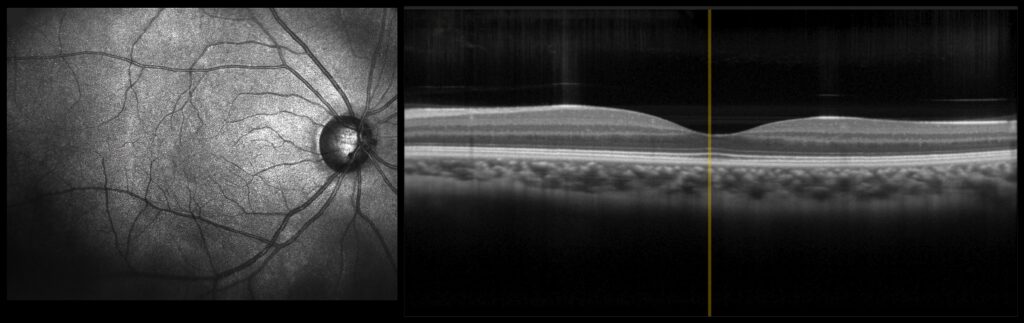
Regular eye examinations become more important as we get older, so that age-related vision changes, like A.M.D., can be detected and treated as early as possible. Macular degeneration can be diagnosed by an ophthalmologist during a dilated eye exam with the help of retinal imaging called an optical coherence tomograph (OCT).
How is A.M.D. Treated?
Intermediate dry macular degeneration is best treated with daily vitamin supplementation, using a specific formula that was proven in large, randomized clinical trials to slow vision loss over the period of many years. This vitamin formula is called AREDS2, named after the 2nd Age-Related Eye Disease Study that proved their effectiveness. Included in the formula are vitamins C, E, lutein, zeaxanthin, zinc, and copper. While the vitamin is largely safe to take twice per day, consult your ophthalmologist to determine if you have any specific contraindications.
For patients seeking additional treatment options, Valeda Photobiomodulation Therapy offers a groundbreaking, non-invasive solution. This innovative therapy uses red and infrared light to stimulate cellular activity in the retina. By enhancing energy production, reducing inflammation, and inhibiting cell death, Valeda has been shown in clinical trials to improve vision, reduce drusen deposits, and slow the progression of geographic atrophy. With a favorable safety profile and proven efficacy, Valeda provides a promising new option for managing intermediate dry AMD and preserving vision.
Advanced dry macular degeneration is treated by a class of injectable drugs called complement inhibitors. The first of these medications to be FDA approved are called Syfovre and Izervay. Syfovre and Izervay work by blocking a type of immune response in the retina, slowing the progression of vision loss due to central retinal atrophy. See your retina specialist to determine if you’d be a good candidate for this new class of medication.
Wet macular degeneration has benefited from the miraculous development of eye injections that can completely halt leakage and bleeding in the retina. These drugs block the chemical signal in the eye that stimulates wet AMD, called vascular endothelial growth factor (VEGF). Prior to these treatments, patients would lose vision despite undergoing laser treatment. Now with the help of periodic eye injections, vision can be restored and maintained indefinitely.
Despite our success with eye injections, herculean efforts continue to find better treatments for both dry and wet macular degeneration. As you read this, studies are ongoing using stem cells, retinal implants, new injectable medicines, drops, pills, and a host of other treatments to reduce treatment burden and improve visual outcomes from macular degeneration.
Will I Go Blind From Macular Degeneration?
Only a small percentage of patients lose their central vision in both eyes due to macular degeneration. This number continues to decrease over time as fewer people smoke and better treatments are made available. The best thing that a patient can do to avoid vision loss is to seek regular examinations with their ophthalmologist and to follow-up on time. Much of the vision loss from macular degeneration comes simply from a delay in treatment.
Patients with severe central vision loss can avail themselves of the many resources to assist with visual tasks, spanning from digital magnifiers bought from Amazon to consultation with community low vision services. Even in the worst-case scenarios, macular degeneration only affects the central vision. The peripheral vision will continue to function, and patients will still have the ability to navigate the room without trouble (no canes or seeing-eye dogs!).
Macular Degeneration FAQs
What is macular degeneration?
Macular degeneration, also called age-related macular degeneration (AMD), is an eye disease that damages the macula, the part of the retina responsible for sharp central vision. It causes gradual loss of central vision, making reading, driving, and recognizing faces more difficult.
The macula sits at the center of the retina and allows you to see fine detail and color clearly. In macular degeneration, the cells of the macula gradually deteriorate over time. The disease most commonly affects people over the age of 60 and becomes more prevalent with advancing age.
There are two main forms of macular degeneration: dry and wet. Dry macular degeneration progresses slowly and is more common, while wet macular degeneration involves abnormal blood vessel growth and can cause more rapid vision changes. Although peripheral vision is usually preserved, untreated central vision loss can significantly limit daily activities.
Early diagnosis and ongoing follow-up help protect remaining central vision.
What are the first signs of macular degeneration?
The first signs of macular degeneration are usually subtle changes in your central vision. Many patients first notice that straight lines appear slightly wavy, words seem distorted, or they need brighter light to read comfortably.
Other early symptoms may include:
- Blurry or fuzzy central vision
- Difficulty recognizing faces
- Trouble adapting to low light
- A small dim or gray spot in the center of vision
In dry macular degeneration, these changes typically develop gradually over months or years. In wet macular degeneration, vision can change more suddenly, sometimes over days to weeks.
Because early macular degeneration may cause only mild or intermittent symptoms, regular dilated eye examinations by an ophthalmologist are important for early detection. Identifying changes early gives you the best chance of maintaining useful central vision.
What does vision look like with macular degeneration?
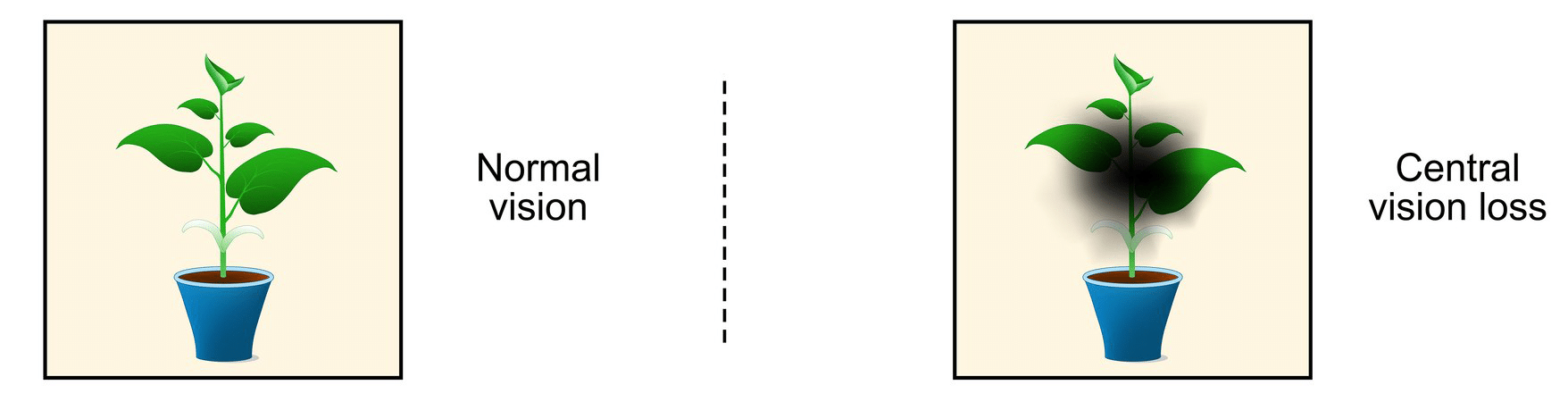
With macular degeneration, central vision often becomes blurred, distorted, or partly missing. Straight lines may look wavy, faces may appear unclear, and a dark or gray spot can develop in the middle of your visual field.
In early stages, patients often notice mild distortion when reading or looking at grid patterns. Letters may seem bent or parts of words may appear faded. As the condition progresses, the central blind spot can enlarge, making detailed tasks like reading, driving, or recognizing faces increasingly difficult.
Peripheral, or side vision, usually remains intact. Even in advanced stages, most patients can still navigate a room and maintain orientation.
However, loss of central clarity can significantly affect daily independence if not addressed.
Prompt evaluation of new distortion or sudden central vision changes is important, especially because wet macular degeneration can progress more quickly than the dry form.
What causes macular degeneration?
Macular degeneration is caused by a combination of aging, genetic factors, and environmental influences that gradually damage the cells of the macula. There is no single cause, but several risk factors increase the likelihood of developing the condition.
The strongest risk factor is age. As we get older, the light-sensitive cells in the macula become more vulnerable to wear and tear. Over time, metabolic waste can accumulate beneath the retina in the form of drusen, small yellow deposits associated with dry macular degeneration. In some individuals, abnormal blood vessels grow beneath the retina, leading to wet macular degeneration.
Other major risk factors include:
- Family history of macular degeneration
- Smoking
- High blood pressure
- Elevated cholesterol
- Obesity
- Poor diet
- Excessive sun exposure
Genetics also plays an important role. Certain inherited variations in immune system pathways have been linked to higher risk for advanced disease.
While aging cannot be prevented, managing cardiovascular risk factors, avoiding smoking, and keeping up with routine eye exams may help reduce the risk of severe vision loss from AMD.
Is macular degeneration hereditary?
Yes, macular degeneration can run in families. Having a close relative with age-related macular degeneration increases your risk of developing the condition, especially in its more advanced stages.
Research has shown that certain genetic variations, particularly in parts of the immune system involved in inflammation and complement pathways, are associated with a higher risk of macular degeneration. However, genetics is only part of the story. Not everyone with a family history will develop the disease, and lifestyle factors such as smoking, diet, and cardiovascular health also play an important role.
If you have a parent or sibling with macular degeneration, it is especially important to have regular dilated eye examinations. Early detection allows changes to be monitored closely and treated at the right time.
What is the difference between dry and wet macular degeneration?
Dry and wet macular degeneration affect the same area of the retina, but wet AMD can cause faster vision changes and usually requires prompt treatment. Dry macular degeneration is more common and progresses slowly. Wet macular degeneration is less common but can cause more rapid vision changes.
Dry macular degeneration accounts for about 85 to 90 percent of cases. It is characterized by the buildup of small yellow deposits under the retina called drusen and gradual thinning of the macular cells. Vision loss typically develops slowly over years.
Wet macular degeneration occurs when abnormal blood vessels grow beneath the retina and begin to leak fluid or blood. This leakage can cause sudden distortion, blurry vision, or a dark spot in the center of vision. Although wet macular degeneration can progress quickly, it is treatable with modern injection therapies that can stabilize vision and improve it in many cases. Treatment is usually ongoing, and results vary based on how advanced the disease is at diagnosis.
Some patients with dry macular degeneration can later develop the wet form. Because of this, regular monitoring is essential so that treatment can begin promptly if changes occur.
How fast does macular degeneration progress?
Macular degeneration usually progresses slowly over many years, especially in the dry form of the disease. Most patients experience gradual changes in central vision rather than sudden, complete vision loss.
In early and intermediate dry macular degeneration, vision may remain stable for long periods. Changes often develop subtly, such as needing brighter light to read or noticing mild distortion. Progression from early to advanced stages can take several years or even decades.
Wet macular degeneration behaves differently. When abnormal blood vessels develop under the retina, vision changes can occur more quickly, sometimes over days or weeks. Prompt treatment with injection therapy can often stabilize or improve vision if started early.
The rate of progression varies widely between individuals and depends on factors such as genetics, smoking history, cardiovascular health, and how closely the condition is monitored. Routine retina examinations allow changes to be detected early so treatment can begin at the right time.
Can macular degeneration be reversed or cured?
Macular degeneration cannot currently be cured, and existing damage to the retina cannot be fully reversed. However, modern treatments can slow progression, stabilize vision, and in some cases improve visual clarity, especially in wet macular degeneration.
In dry macular degeneration, vitamin therapy such as the AREDS2 formula can reduce the risk of progression in intermediate stages. Newer therapies, including complement inhibitors (Syfovre and Izervay) for advanced dry AMD, can slow the growth of blind spots. While these treatments do not restore lost cells, they can help preserve remaining vision for longer.
In select patients with earlier-stage disease, light-based treatments such as Valeda photobiomodulation therapy may also be used to support retinal function and slow progression.
Wet macular degeneration is treatable with anti-VEGF eye injections. These medications can stop leakage from abnormal blood vessels and often improve vision when started early. Many patients maintain reading and driving vision for years with consistent treatment.
Although macular degeneration cannot be cured, early diagnosis and consistent care can significantly improve long-term visual outcomes. Regular monitoring allows treatment to begin at the optimal time to protect central vision.
What is the best eye vitamin for macular degeneration?
The most studied eye vitamin for macular degeneration is the AREDS2 formula, which can lower the risk of progression in appropriate patients with intermediate AMD.
AREDS2 contains vitamin C, vitamin E, zinc, copper, lutein, and zeaxanthin. These nutrients help reduce oxidative stress in the retina and support the health of macular cells. Studies from the Age-Related Eye Disease Study demonstrated that this formula can lower the risk of progressing to advanced disease by about 25 percent in appropriate patients.
It is important to understand that AREDS2 does not prevent macular degeneration and does not restore lost vision. It is most beneficial for patients with intermediate dry AMD or advanced disease in one eye. It is not typically recommended for early-stage AMD without retinal changes.
Before starting any supplement, it is best to confirm your stage of macular degeneration with a retina specialist to ensure that AREDS2 is appropriate for you.
What happens if you stop eye injections for macular degeneration?
If you stop receiving eye injections for wet macular degeneration, abnormal blood vessels can begin leaking again, leading to renewed swelling, bleeding, and potential permanent vision loss. These injections control the disease, but they do not cure it.
Anti-VEGF medications work by blocking the signals that cause harmful blood vessels to grow under the retina. When treatment is paused for too long, those signals can become active again. Over weeks to months, fluid may reaccumulate in the macula, and central vision can decline.
In some cases, vision loss that occurs after stopping injections may not fully recover, even if treatment is restarted. That is why staying on the recommended treatment schedule is critical for maintaining reading and driving vision.
If scheduling, transportation, or injection frequency is becoming difficult, speak with your retina specialist. There may be extended-interval treatments or long-acting options available that can reduce treatment burden while maintaining visual stability.
Does macular degeneration cause blindness?
Macular degeneration can cause significant central vision loss, but it rarely causes complete blindness. The disease primarily affects the macula, which controls detailed, straight-ahead vision, while peripheral vision usually remains intact.
In advanced stages, especially if untreated, patients may develop a large blind spot in the center of their vision. This can make reading, driving, and recognizing faces very difficult.
However, side vision is typically preserved, allowing individuals to navigate their surroundings independently.
The risk of severe central vision loss has decreased over time due to modern treatments. Anti-VEGF injections for wet macular degeneration and newer therapies for advanced dry AMD have significantly improved long-term outcomes.
Early diagnosis and timely treatment are the most important factors in reducing the risk of severe vision impairment. With proper care, many patients maintain functional vision for years after diagnosis.
Where to Get Macular Degeneration Care in Sarasota and Venice
You can receive expert macular degeneration evaluation and treatment at any of our Shane Retina locations in throughout Sarasota and Venice, Florida. Each office offers comprehensive retina care, advanced diagnostic imaging, and proven treatment options in a calm and efficient clinical setting.
Sarasota - University Parkway Office
Located just west of I-75 on University Parkway in University Health Park.
Our University Parkway location serves patients from Sarasota, Lakewood Ranch, Bradenton, and nearby communities. This office provides comprehensive evaluation and treatment for both dry and wet macular degeneration.
Sarasota - South Tamiami Trail Office
Located on South Tamiami Trail just south of Bee Ridge Road.
Our South Tamiami Trail location serves patients throughout Sarasota, Siesta Key, and surrounding neighborhoods. This office offers full evaluation and treatment for macular degeneration, with a focus on ongoing care and clear communication.
Venice Retina Office
Located in central Venice near Venetia Bay Boulevard.
Our Venice Retina location serves patients in Venice, North Port, Englewood, and nearby communities. This office provides comprehensive evaluation and treatment for macular degeneration, including ongoing monitoring and advanced therapies.
Reviews of Our Macular Degeneration Services
Dick Shilts
Retired Basketball Coach
Ken Angelo
The tests and the examination by Dr Shane was very thorough .
Ayah gave me new information about my particular symptoms of macular degeneration that I had not received before. Thank you.
She also did a very good job of marking a difficult procedure less unpleasant.
The entire experience was excellent.
I would highly recommend this clinic.
Contact Us Today
For those lucky enough to live in Sarasota or Manatee County, the renowned staff at Shane Retina is available to help with your macular degeneration evaluation and treatment. Our retina specialists in Sarasota, FL, led by Dr. Thomas Shane M.D., will make sure you get the right treatment you need.
If you are experiencing any A.M.D. symptoms, or have a concern about your eye health, contact us today to set up an appointment at our Sarasota or Manatee County offices. Dr. Shane works hard to be available to our patients to answer questions and calm concerns.